
How to Search Menominee County Civil Dockets
MiCOURT Case Search is the public starting point for Menominee civil dockets. Pick 95A District Court for district civil matters. For circuit civil or domestic-relations cases, pick 41st Circuit Court - Menominee instead. Case Number Search works best when a summons or order gives you the number. Name Search can find a party or business. Similar names demand a close look at the court, case year, party role, caption, and filing date.
Treat public results as an index. It's not a promise that every complaint, exhibit, or enforcement paper is online. Start with the public register of actions. Then ask the responsible clerk for a named document. Circuit requests go to Marc Kleiman, Menominee County Clerk and Circuit Court Clerk. Call him at (906) 863-9968. For district civil records, call the 95A clerk at (906) 863-8532. Both courts share the courthouse at 839 10th Avenue, Menominee, Michigan 49858. A public terminal or in-person inspection there can fill in what the online docket omits.
- Select the Menominee court that fits the case level before entering a party name or case number.
- Search the exact case number if known. Otherwise use a party or business name and a narrow filed-date range.
- Check the case year, type code, caption, party role, status, and filing date before opening the record.
- Read the public register in date order for service, motions, settings, orders, judgment, and post-judgment entries.
- Request the public complaint, order, judgment, satisfaction, or another specific paper from the clerk if the register points to it.
Menominee Civil Court Split
95A District Court's civil-cases page assigns civil claims up to $25,000 to district court. The county lays out the sequence plainly. File a summons and complaint where the incident occurred or where the defendant lives. Pay the filing fee and arrange service. The case then moves toward a bench trial, jury trial, settlement, or dismissal, with a judgment following where appropriate. Small claims carry their own $7,000 limit. Landlord/tenant, land-contract forfeiture, attachment, and garnishment matters each run on separate tracks. All sit inside district-court jurisdiction.
The county's district civil-case page states these rules directly.
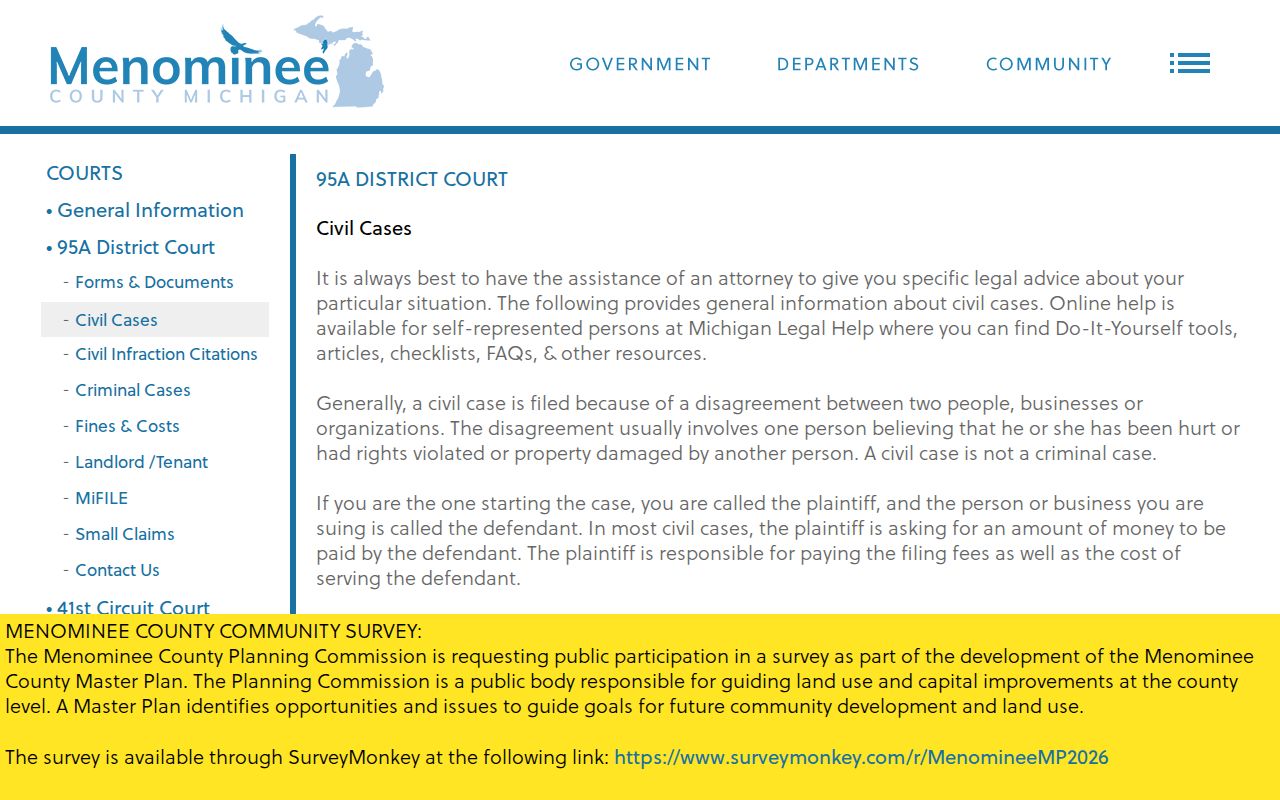
That sequence explains the shape of a docket. Filing and service entries usually show up first. After that, a Menominee civil docket reaches trial, settlement, dismissal, or judgment.
Claims of $25,000 or more generally belong in the 41st Circuit Court. A circuit civil docket can trace a complaint, answer, motion practice, discovery-related orders, mediation, trial, judgment, post-judgment motions, and appeal. Domestic matters run through the circuit and Friend of the Court channels instead. Always settle the court level before running a name search. A result in one court may hide a separate proceeding in the other.
What a Civil Docket Shows
A civil docket is a chronological register of the case. Its public portion can show the court, case number, caption, plaintiff and defendant roles, filing date, and service or return entries. It may also list motions, settings, orders, the judgment, costs, post-judgment activity, and a closure or balance field where available. Remember what an entry means. It records what was filed or ordered, nothing more. An entry doesn't prove a plaintiff's allegation true. It doesn't make an exhibit public or confirm that a current balance is complete.
| Case number | Copy the number and year exactly as shown and retain the court selected in MiCOURT. A code such as GC identifies a general civil monetary category. |
|---|---|
| Parties and caption | Confirm plaintiff or defendant role and the caption. Businesses can be indexed as party names. |
| Service and filings | Look for complaint, answer, motion, return, and order entries. A listed title does not guarantee a public download. |
| Setting and result | A calendar line is a scheduled event. Read later entries for a settlement, dismissal, judgment, or other disposition. |
| Post-judgment entries | Garnishment, writ, execution, satisfaction, or payment entries concern enforcement or collection, not a retelling of the dispute. |
Need a lookup by identifier instead of party name? Open the site's Menominee County case-search information after choosing the correct court.
Menominee Civil Docket Code Guide
A code at the front of a case number tells you what kind of civil dispute it is. The Michigan Judiciary publishes a case-type-code list. It covers every prefix used in Menominee County civil dockets. GC marks general civil cases seeking money. GZ covers general civil cases that seek something other than money. Landlord and tenant disputes carry LT. Small claims cases use SC, and land-contract summary proceedings use SP. The code alone is only a start. The court, the caption, and the register of actions give a fuller picture than any single label.
- GC
- General civil monetary case, usually a district civil category when it is within 95A's jurisdiction.
- GZ
- General civil nonmonetary case, which still requires the caption and court level for context.
- LT
- Landlord/tenant case. Its summons, notice, or order can carry urgent dates that a short case display may not explain.
- SC
- Small claims case, a separate lower-dollar process with its own forms and representation rules.
- SP
- Land-contract summary case, a distinct statutory case type rather than a generic civil label.
The county's forms and documents page links to Michigan and small-claims forms. For a particular public record or current case status, ask 95A directly.
Menominee Civil Docket Types
95A civil dockets hold the case categories assigned to district court. The 41st Circuit docket takes the higher-value claims and circuit matters. A case type tells you the procedural path. It doesn't give a full account of the dispute. Nor does it signal that either side's position won. Family and domestic matters call for the circuit and Friend of the Court route. Administrative records and protected details sit apart from an ordinary civil register.
- General civil monetary claims within 95A's $25,000 jurisdiction.
- General civil nonmonetary cases under the GZ code.
- Small claims matters up to $7,000.
- Landlord/tenant and land-contract forfeiture matters.
- Attachment, garnishment, and other post-judgment procedures.
- Circuit civil claims of $25,000 or more, plus domestic and other general-jurisdiction proceedings.
Note: A civil case type narrows a search. For describing a particular case, the public register and the court's actual caption remain the better sources.
Menominee MiFILE Civil Intake
MiFILE is the electronic filing and service system, not a public civil docket viewer. Registered filers enter through its home page. Its court list confirms both Menominee venues take part in the system. The public should use MiCOURT to locate a case. The clerk handles inspection or copies. One caution matters here. A document sent through MiFILE isn't docketed right away. Docketing waits until the clerk accepts it and the court confirms the entry. The official MiFILE site lays out the entry point for filers.
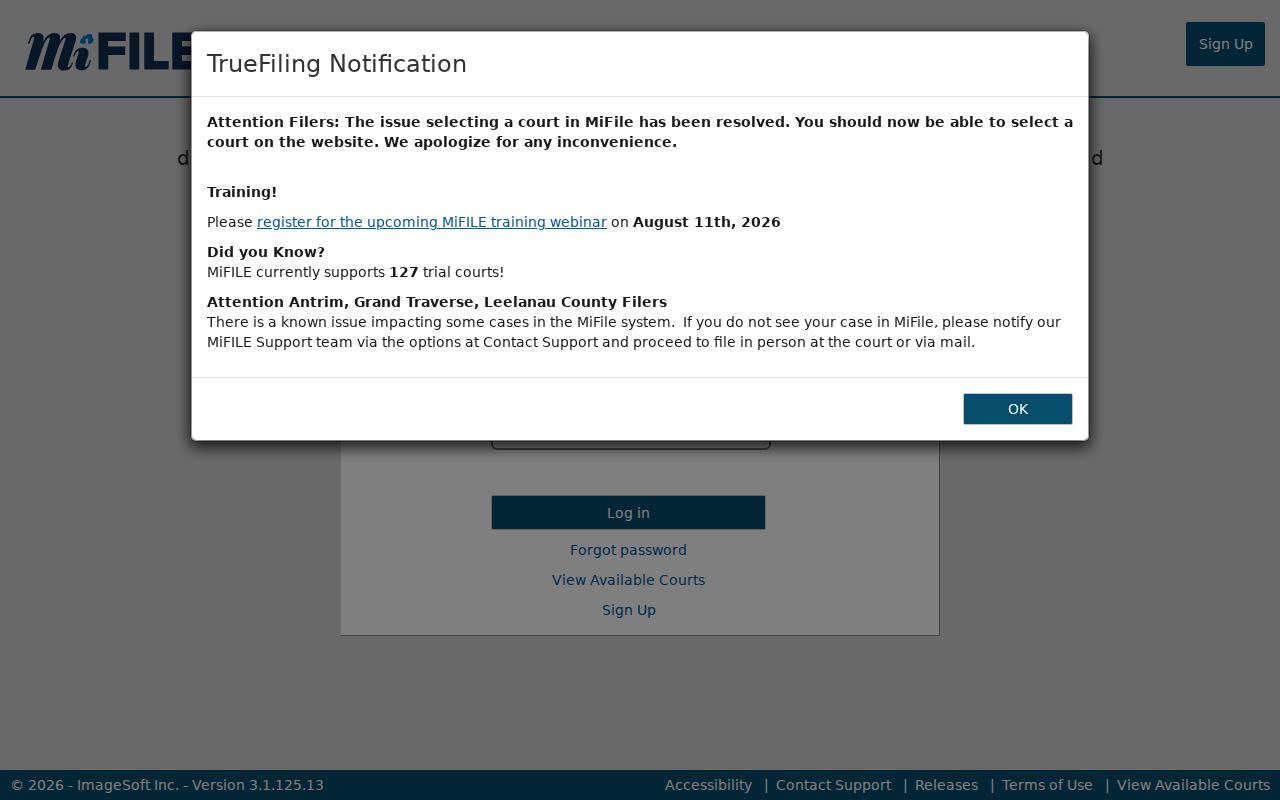
That filing interface stands apart from the public case-search record. It is not an open records archive.
MiFILE's available-courts page lists the courts enrolled in the system.
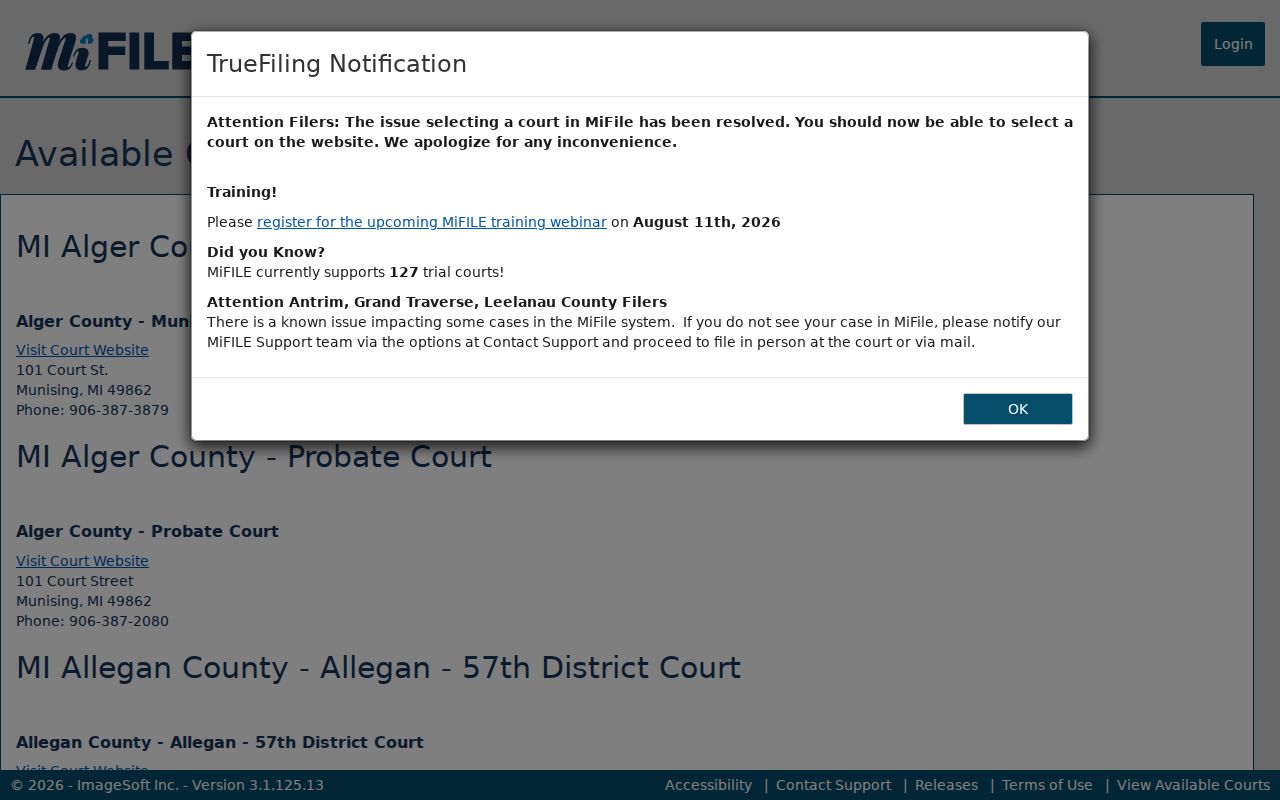
Both the 41st Circuit and 95A accept civil e-filing.
Settings and Hearings on Civil Dockets
A civil setting can be many things. A motion hearing, mediation, a trial, a small-claims date, or a landlord/tenant matter can all appear on the docket. They look the same way when listed. The entry itself is just a schedule. It does not tell you how the case ended. Pull the case detail or public calendar. Note the court, time, room, case number, party display, and event description. Then compare later docket events, an order, or a clerk response before treating the setting as completed, continued, dismissed, or resolved.
When the date matters, call the clerk shortly before you travel. Historic calendar items sometimes drop out of a current display. A public register may still preserve the event history. The public Court Display works well for the date and room. For a document or a confirmed outcome, the case file remains the source. The clerk is the other half of that answer.
Menominee Circuit Civil Filing Change
Menominee Friend of the Court announced a filing change. Effective November 13, 2025, mandated filers in Circuit Court must e-file civil documents through MiFILE. Custody, parenting-time, domicile, and support motions top the list. The notice points filers to the stated credit or debit payment route. Cash, money orders, cashier's checks, and personal checks can cause trouble. They can delay or block the proper filing path.
The county's Friend of the Court MiFILE notice spells out the mandate. It sits on the county's official page.
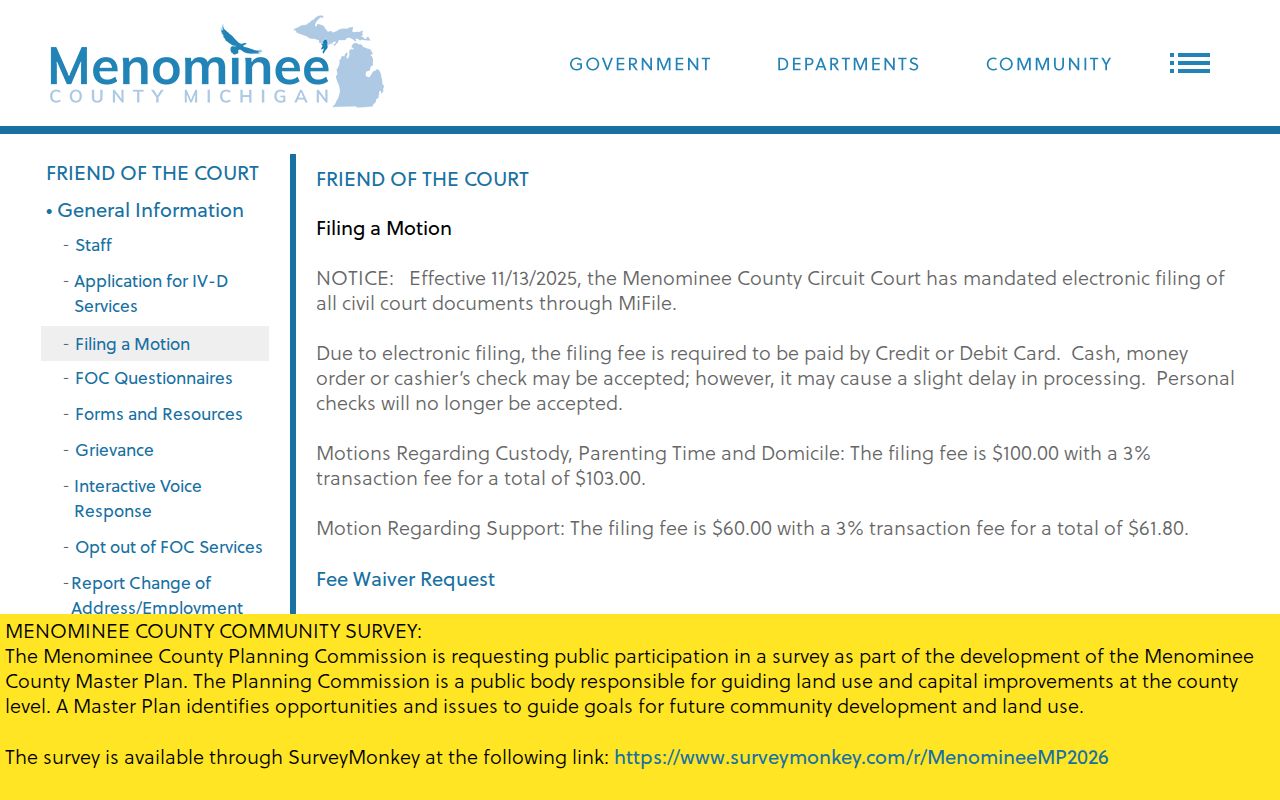
The mandate changes how a filing reaches the clerk. MiCOURT still just handles the public search side.
Registered filers sign in at the MiFILE login page, the state's official access point for e-filing accounts.
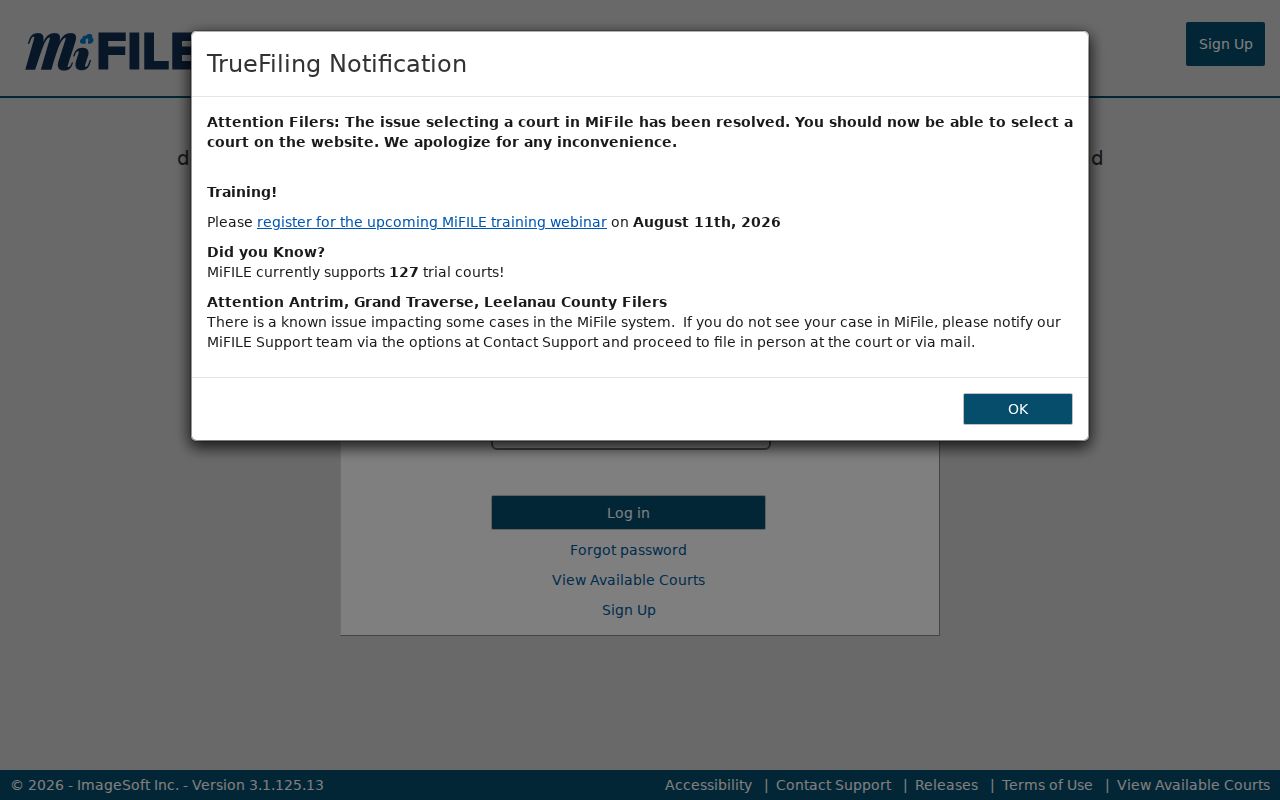
Account access and e-service don't replace the public register. They also can't stand in for a clerk copy request or the court's decision on accepting a filing.
Public Access to Menominee County Civil Dockets
Michigan court records fall under MCR 8.119. When you request a copy, name the court, the case number or year, the caption, the exact document, and whether you want an ordinary or certified copy. Do not use county FOIA to reach court records. FOIA covers county administrative records on its own timetable. The court alone controls its judicial file.
Michigan's redaction rule, MCR 1.109(D)(9), shields personal identifiers. Juvenile, PPO, adoption, mental-health, guardianship, sealed, and other nonpublic matters may be excluded or restricted. If a clerk reports a restriction, ask whether a public register, a redacted copy, or the order and rule basis is available. A missing public result is an access outcome. It says nothing about the case.
Key Rules:
MCR 8.119 controls inspection, copying, and access restrictions for Michigan court records.
MCR 1.109(D)(9) requires redaction of protected personal information in court filings.
MCL 600.2546 provides state certification guidance; verify Menominee copy and certification charges before paying.
Menominee Civil Judgment Entries
A judgment, writ, satisfaction, execution, garnishment, or payment line each carries its own meaning. A judgment is an enforceable court result. A satisfaction suggests the judgment was paid. Garnishment and execution are collection tools. None of these entries restates the underlying claims or a complete current accounting. The county's fines-and-costs information concerns court obligations. A civil judgment balance can follow a different record path.
Tell the clerk exactly which record you need. Is it the register, the judgment, a certified copy, a satisfaction, a current balance, or one enforcement document? Narrow requests cut down false matches and redaction review. The county posts no complete local civil-copy fee schedule. Confirm the current cost, payment method, and availability before sending money or relying on an online balance.