
The Menominee County Court Calendar
MiCOURT Public Court Display is where Menominee settings reach the public. A party name, a time, a room, and a case number can all appear there. Michigan's calendar documentation describes even more fields. Event and hearing dates and times appear, plus courtroom, jurist, action category and type, case category, subcategory, and a public indicator. So the display still helps. It can point you to a hearing window when no document is public.
Pick the right court first. Filter out 41st Circuit Court - Menominee from 95A District Court. The Menominee court calendar is not a single merged list. Circuit felony and civil settings sit apart from 95A misdemeanors, traffic, civil infractions, and district civil matters. Remember the calendar is a schedule, not the whole docket. A blank result can mean several things. It may reflect filters, public limits, the wrong court, an older event, or an interface that is down.
Menominee Court Display Filters
The MiCOURT calendar documentation lays out the Court Display model that powers a calendar search. You can narrow a Menominee County court docket by court. Hearing or event date range is another filter, along with action category and type. More filters cover case category and subcategory, courtroom, jurist, and a public flag. Category choices run from civil and criminal to domestic, juvenile, non-traffic, probate, and traffic. One caveat: the public screen often shows fewer controls than the developer docs describe. Match your search to the labels actually on screen.
The official MiCOURT documentation spells out every display filter in detail.
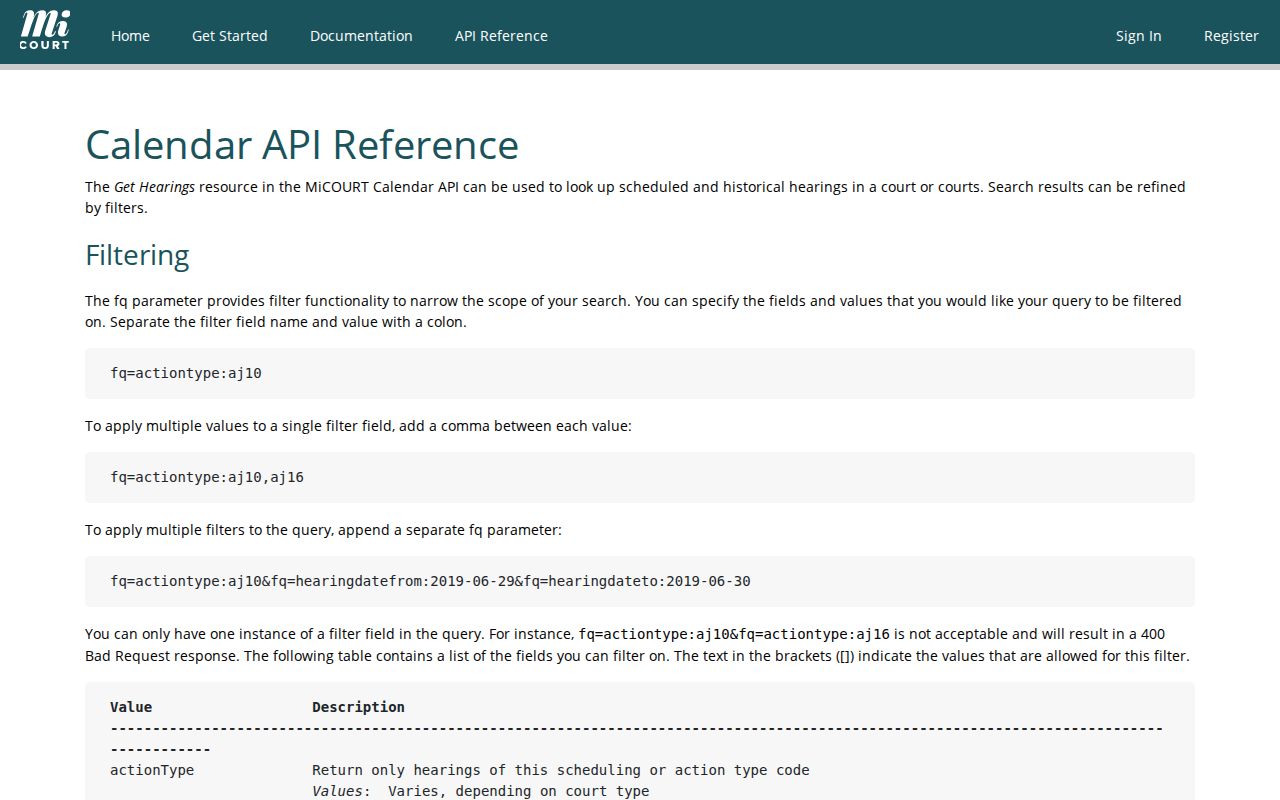
Those documented fields argue for a wide date-and-court search over a lone party-name search when you are hunting a Menominee court calendar setting.
Results also come in pages. The documented service defaults to a limit of 20 with an offset mechanism, so later pages may hold settings the first screen never showed. Keep paging before you assume the range is empty.
How to Find Your Menominee Court Date
Need a current Menominee date? Begin at the public Court Display. Then open MiCOURT Case Search for public case detail once a case number or party result turns up. That detail helps verify the court, the public events, and the related setting. No case number in hand? Search the calendar by court and date. If a citation, summons, order, or prior docket entry carries the number, search the case by number first instead.
- Open Public Court Display and select the Menominee court that holds the case.
- Choose the date or date range, then use courtroom, jurist, category, or event filters when the public interface offers them.
- Record the party display, case number, date, time, room, and event type from a matching entry.
- Open MiCOURT Case Search or public case detail to compare the calendar setting with the docket history.
- Call the proper clerk if the matter is soon, the result is missing, or the displayed setting could have changed.
Phone calls still work well here. For 41st Circuit matters, ring the Circuit Clerk at (906) 863-9968. For 95A District matters, call the district clerk at (906) 863-8532. Both courts share one address: 839 10th Avenue, Menominee, Michigan 49858. At the counter, ask for the public terminal. You can also ask for the current setting or the public register of actions. General courthouse hours run Monday through Friday, 8:00 a.m. to 4:30 p.m. County holidays are excluded.
Menominee Calendar Confirmation Route
Treat the online calendar as one layer only. A setting can be adjourned, continued, administratively moved, or canceled after you last checked the screen. Save the details you used: query date, court, date range, filters, room, time, case number, and any status language. Then call the clerk shortly before you travel. For a historic hearing, ask for the public register of actions or the specific hearing record. The current calendar may no longer show that date. The 41st Circuit contact source lists the office's current phone and contact details.
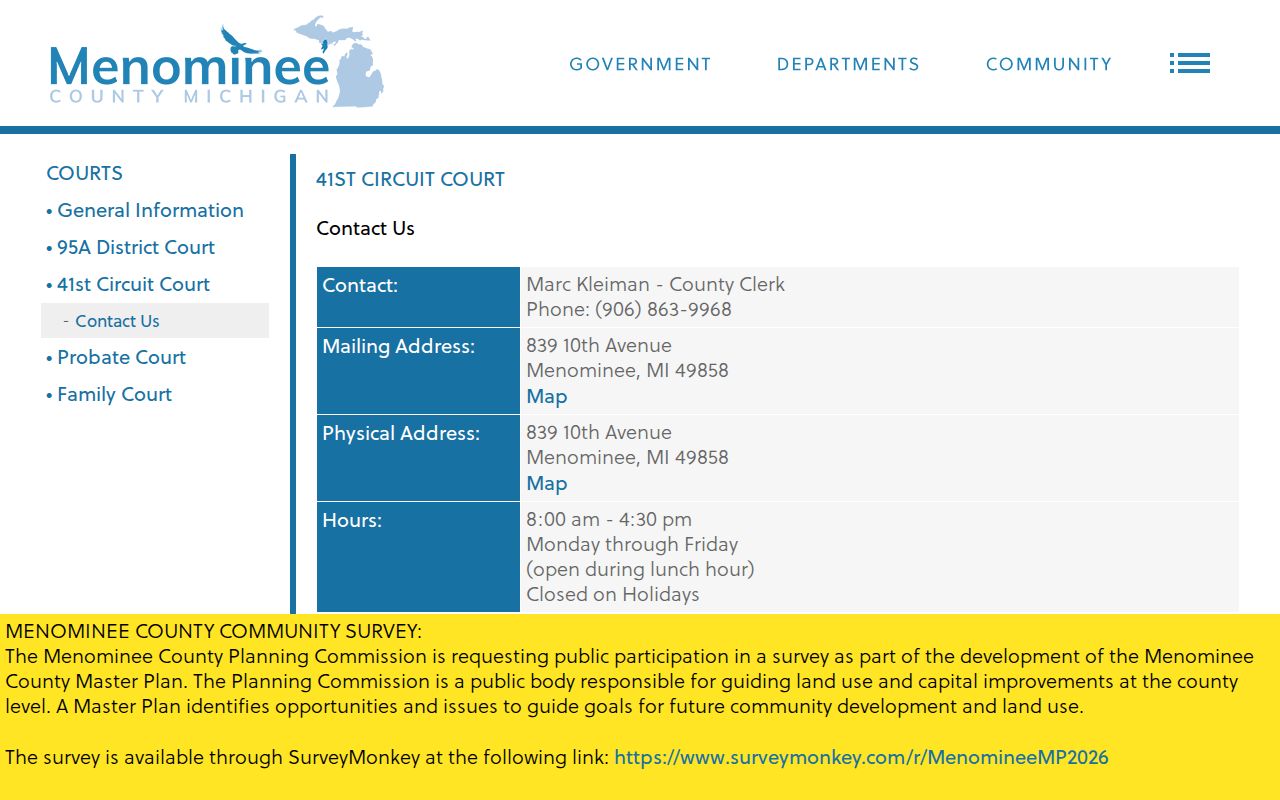
A Menominee calendar search can come up empty. It may show nothing current, complete, or historical. Even then, the circuit contact route still gets you a clerk confirmation.
Do not lean on a prosecutor, the police, the jail, or any other agency in place of the court's calendar or docket. The court clerk answers court dates, registers, and public court-file questions. Go to that office.
Reading a Menominee Court Setting
Every calendar field is a scheduling field. Read them that way. The party display names the case participants shown publicly, while the court and case number tie the item to the right record. Date and time say when the setting is listed. A room or courtroom marks the place assigned at publication, and the jurist field names the judicial officer or calendar assignment where the display gives one. The event type states a procedural purpose. It never states a result.
| Date | The scheduled calendar date, which can change through an adjournment, continuance, or cancellation. |
|---|---|
| Time | The listed hearing or event time. Confirm whether the case is individually set or part of a larger docket call. |
| Courtroom | The room shown for that published setting. A room field does not guarantee that a matter will be heard there after a change. |
| Jurist | The judge, magistrate, or assigned judicial calendar field when public. It is not a statement about a ruling. |
| Setting type | The event label, such as arraignment, pretrial, motion, formal hearing, informal hearing, sentencing, or trial. |
An appearance on the public calendar means one thing only: a setting was listed. It does not establish attendance, testimony, an uncontested hearing, a ruling, disposition, or final judgment.
Menominee Calendar Field Meanings
Michigan's calendar API reference separates event fields from hearing fields. Action categories come next. Public flags, courtrooms, jurists, and pagination are covered too. That vocabulary helps. Use it when you compare a public calendar display with the underlying case record. An event may be administrative or supplemental. It may not be a true hearing at all. A public flag works as an access filter, nothing more. Action categories include hearing, holiday, and supplemental. None of these labels, by itself, tells you anything about the merits of a case.
The official API reference defines each field and flag term by term.
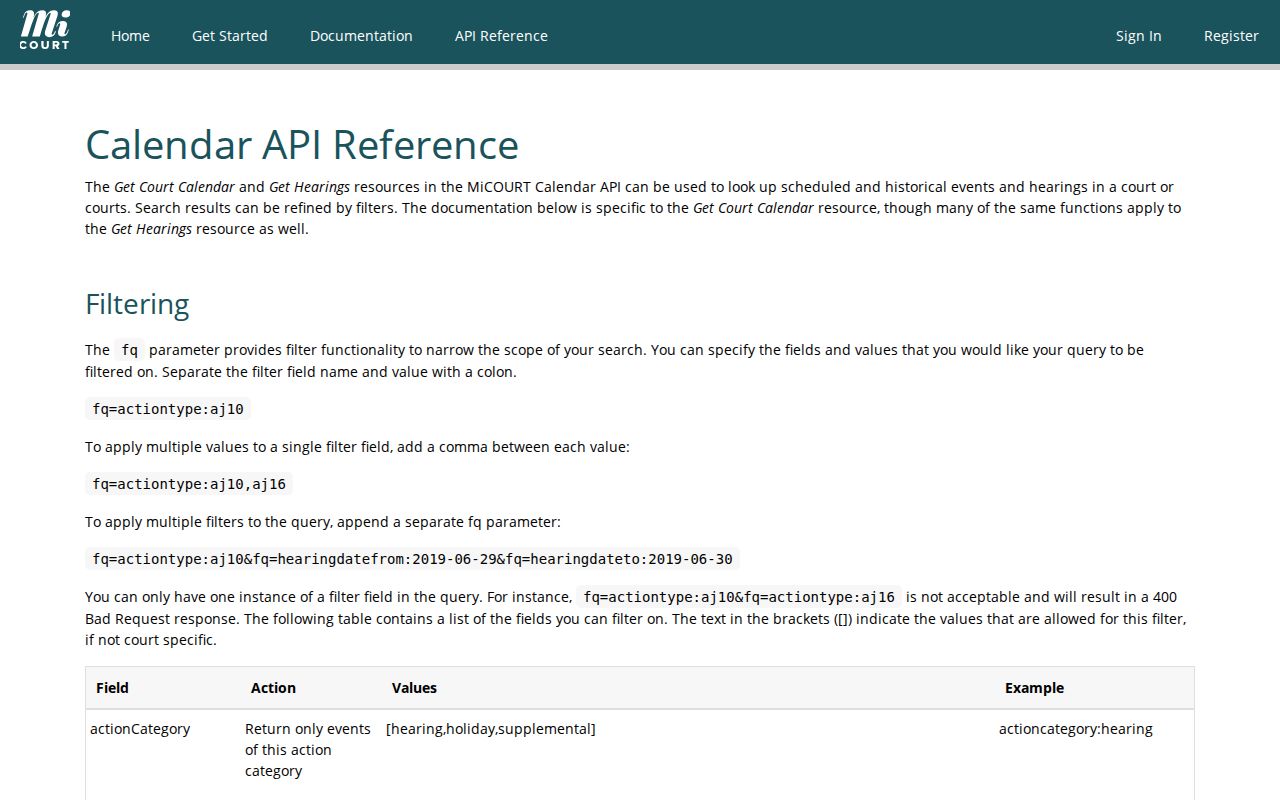
Treat the field list as a simple checklist. It captures the facts worth saving before you verify a Menominee court setting with the clerk.
- Pretrial
- A stage before trial. The calendar label does not state whether the case will resolve or proceed to trial.
- Status or review
- A court check-in or case-management event, not necessarily a merits hearing.
- Motion
- A setting concerning a request for a court ruling. Filing a motion does not mean it was granted.
- Supplemental event
- A calendar event that can be administrative rather than a contested hearing.
Resets, Continuances, and Cancellations
A reset, continuance, or cancellation moves a date. It does not decide the case. Either side, or the court itself, can shift a pretrial, motion, trial, sentencing, or review hearing, and once that happens the item may vanish from the current calendar view. Write down the original setting and then match it against later docket activity where public. When it comes to proof of a change, trust the updated case entry, a court order, or clerk confirmation over an older calendar screen.
Bring the right court and case number when you ask about a moved date. A public calendar often shows only part of the history. Instead of guessing from a gap, ask for the register of actions. A single calendar line simply cannot tell you whether a hearing went forward, was adjourned in court, resolved by agreement, or dropped for an administrative reason.
Note: Save the search date and the filters you used, since a calendar display can change after the screen is checked.
Menominee Criminal Setting Sequence
Menominee's local 95A criminal sequence explains many of the labels on a calendar. Arraignment comes first. For felonies, a preliminary examination generally follows within 21 days. Misdemeanors head instead to a pretrial conference, then trial or another resolution. These are guideposts, not promises. A probable-cause finding can lead to bindover. At that point you may need to check both the 95A criminal docket and the 41st Circuit felony docket.
So always check the case stage during a calendar search. An arraignment or preliminary examination setting in 95A means something different from a circuit sentencing. It also differs from a post-judgment setting. Pull the court, case number, and event type together before you ask the clerk to confirm. A listed future date may never arrive. The case could be continued, resolved, or moved elsewhere.
What To Do If You Miss a Setting
Call the court promptly. Have the case number and the missed date ready. The right next step depends on the case type and the court's current order, so the clerk can point you to the public record of the setting and flag any new date or other action. If an attorney of record is involved, that attorney can address the case through the proper process. Skip the older calendar image, the relative's report, and the general internet search. None of those can tell you what the court now requires.
Missed a Setting? A missed criminal court date can lead to further court action, and a missed traffic response or appearance can lead to a default judgment and sanctions.
Call the 41st Circuit or 95A clerk immediately, identify the case number, and ask for the current public setting or register entry.
For a missed Menominee County court setting, consult a licensed attorney about obligations that may apply before appearing.
Menominee Traffic Hearing Timelines
Menominee traffic and civil-infraction matters run through 95A. The county's citation instructions set a firm window. A hearing request must be received within 14 days. An informal hearing goes before a magistrate. A formal hearing goes before a judge. The type should show up as its own distinct setting on the calendar. The distinction matters, since a hearing request, a hearing date, a default entry, and a final disposition are each separate docket events.
The county warns that failing to respond or appear can bring default judgment and sanctions. To trace the history behind a traffic calendar setting, search the 95A case record. Or ask the clerk for the register, the citation disposition, or a specific event record. Court calendar information answers nothing about a separate Secretary of State record question.